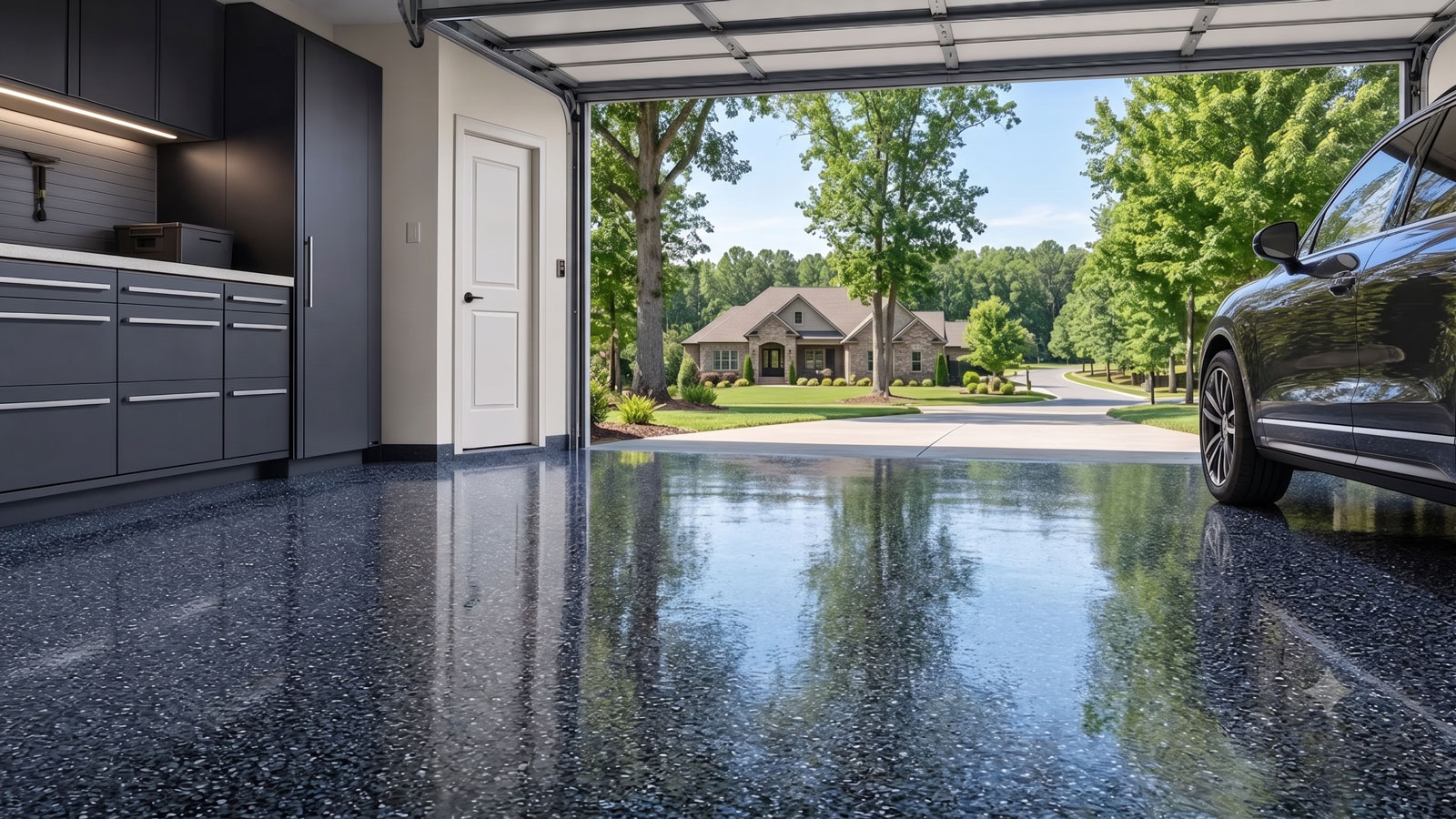
Garage Floor Coating in East Windsor, NJ
Floor Coating Services in East Windsor, NJ
East Windsor Township's garage floors reflect an established Mercer County community with older village-area properties, Route 33 and Turnpike corridor development and later subdivisions. Its master plan was adopted October 4, 1993 and has undergone multiple land-use amendments and periodic reviews, including a 2019 report and a 2022 reexamination. The municipality also maintains a Route 33 corridor revitalization plan and transportation studies. Those changes describe public development patterns, not the concrete condition inside an individual garage. An older house may contain a later pour, while a newer floor may have curing sealer.
Water management and access create a separate set of homeowner questions. East Windsor's highway-adjacent and residential areas have different paved-site configurations, but corridor drainage planning does not establish moisture beneath private concrete. Ask whether a driveway slopes toward the door, where roof runoff discharges and whether there are old water marks or persistent damp patches. A nearby road or water feature cannot replace this inspection.
Epoxy, polyaspartic and decorative-flake coatings may improve cleanup on a sound prepared surface. Before selecting a finish, assess old paint, oil, cracks, patches, control joints, garage access and installation timing. A decorative coating cannot correct active water entry or structural damage.
Local Market Insight
East Windsor's master plan was adopted in October 1993 and reexamined in 2019 and 2022, with specific Route 33 revitalization and transportation planning. Its established and later-built garages therefore need inspection of actual slab history, access and runoff rather than city-name assumptions.
What Affects the Cost of Garage Floor Coating in East Windsor?
An East Windsor garage on an established road may have multiple layers of floor paint or repairs, while a later attached garage can require sealer removal and control-joint work. Square footage does not account for all of those preparation differences.
Route 33 redevelopment and transportation planning give useful site context but cannot prove that a residential slab is damp. Ask for drainage and concrete conditions to be evaluated separately from repair work, grinding and final coating layers.
- Concrete from different eras: East Windsor's older neighborhoods and later Route 33-area growth can include garages built or repoured at different times. Verify the slab and past repairs by inspection.
- Old paint or builder treatments: Garage floors may contain paint, oil, sealers or curing products. Removal and mechanical profiling must match the intended coating system rather than relying on outward appearance.
- Driveway and road drainage: Corridor and stormwater planning concern public systems, not private slab moisture. Check the driveway pitch, downspouts and water marks at the garage door.
- Cracks and doorway damage: Stable cracks, control joints and failing patches should not receive identical treatment. Define what will be repaired and whether movement needs separate evaluation.
- Equipment and parking staging: An older compact lot, deep residential driveway or garage with storage can alter grinder access, perimeter labor and temporary vehicle parking.
- Winter residue and finish: Deicing grit, snowmelt and daily traffic influence traction and cleaning preferences. Verify system layers, proper installation conditions and manufacturer-recommended cure time.
Call for a clear, project-specific estimate — or request one online.
East Windsor's 1993 Plan, Route 33 and Different Garage Histories
East Windsor's current planning archives start with a Master Plan adopted in October 1993, followed by a series of supplemental changes and periodic reexaminations, including work in July 2019 and a 2022 report. The township separately addresses Route 33 corridor revitalization and Turnpike-related transportation. Those documentary distinctions explain why buildings and site layouts vary across East Windsor; they do not identify the age or quality of an individual concrete garage floor.
A house on an established residential street may have a garage added or repoured years later. A more recent attached bay may have a tight, smooth concrete finish but still need removal of curing compounds. Inspect oil staining, prior paint, patch colors, cracked sections and control joints rather than treating newer development as a guarantee of adhesion readiness.
An estimate should also account for practical access. A tight property with storage and steps can require extra staging, while another garage has a broad open driveway but more edges or drains to prepare. Ask whether old-film stripping, grinding, crack and joint repairs, masking and complete coating layers are included.
Once the concrete is confirmed sound, an epoxy, polyaspartic or flake finish can be selected around appearance, cleaning and return-to-service needs. Without good preparation, a premium topcoat cannot reliably compensate for failing old paint, structural movement or moisture problems.
Route 33 Drainage Context and Actual Garage Water Entry
East Windsor has studied its Route 33 corridor and transportation connections while maintaining land-use and development regulations that include runoff considerations. Those public documents are evidence of changing paved areas and infrastructure, but they do not establish which residential driveways shed water safely or whether any given slab has excess moisture.
On the property, look for water running downhill toward the overhead door, roof outlets near the approach, low spots at the threshold and any history of stormwater crossing the entrance. Inside, failed old paint or persistent dark concrete may warrant further assessment. These conditions should be distinguished from snowmelt deposited beneath a parked car or ordinary cleaning water.
Winter introduces grit and deicing residue into East Windsor garages. A continuous sound coating may make sweeping and rinsing easier, but maintaining the finished floor still requires cleaning abrasive debris and removing standing liquid. Ask about traction where wet shoes and tires routinely meet the surface.
If outside water entry occurs, address drainage or threshold conditions before installing a coating. Where internal concrete moisture is suspected, evaluate it under the proposed resin system's specifications. Then quote removal of existing films, mechanical profiling, crack repairs, layers, texture and actual return-to-parking timing. Public corridor planning should focus the inspection rather than replace it.
Frequently Asked Questions
Does East Windsor's Route 33 development mean all garages are new?
No. Route 33 planning covers certain corridors, not every residential building. Even newer concrete may need grinding and removal of curing sealers, while older garages can have repoured floors.
Does a township stormwater plan determine whether my slab is damp?
No. Public water-management rules cannot measure a private floor. Check driveway grade, roof runoff, signs of water entry and the concrete itself.
Can a coating stop water entering under the garage door?
No. Exterior runoff needs drainage, grade or threshold correction. A decorative floor system should follow resolution of active water entry.
What should an East Windsor coating quote specify?
Ask for removal of prior films, mechanical grinding, stable crack and joint treatment, edge details, moisture assessment when warranted, full coating layers, texture and manufacturer-based vehicle-return time.
How should a finished garage floor be maintained through winter?
Sweep grit, remove salty snowmelt and keep standing liquid from accumulating. A sound coated floor can simplify cleanup compared with porous concrete, but it does not eliminate maintenance.
East Windsor Neighborhoods & Local Context
Phone Quote Line
Speak with a local floor coating specialist about your project and get a realistic estimate range.
(609) 222-8999Typical Project Cost
$3,000–$5,500
Typical range for a standard two-car garage. Final pricing depends on floor size, concrete condition, prep work, coating type, and finish options.
Helpful Guides