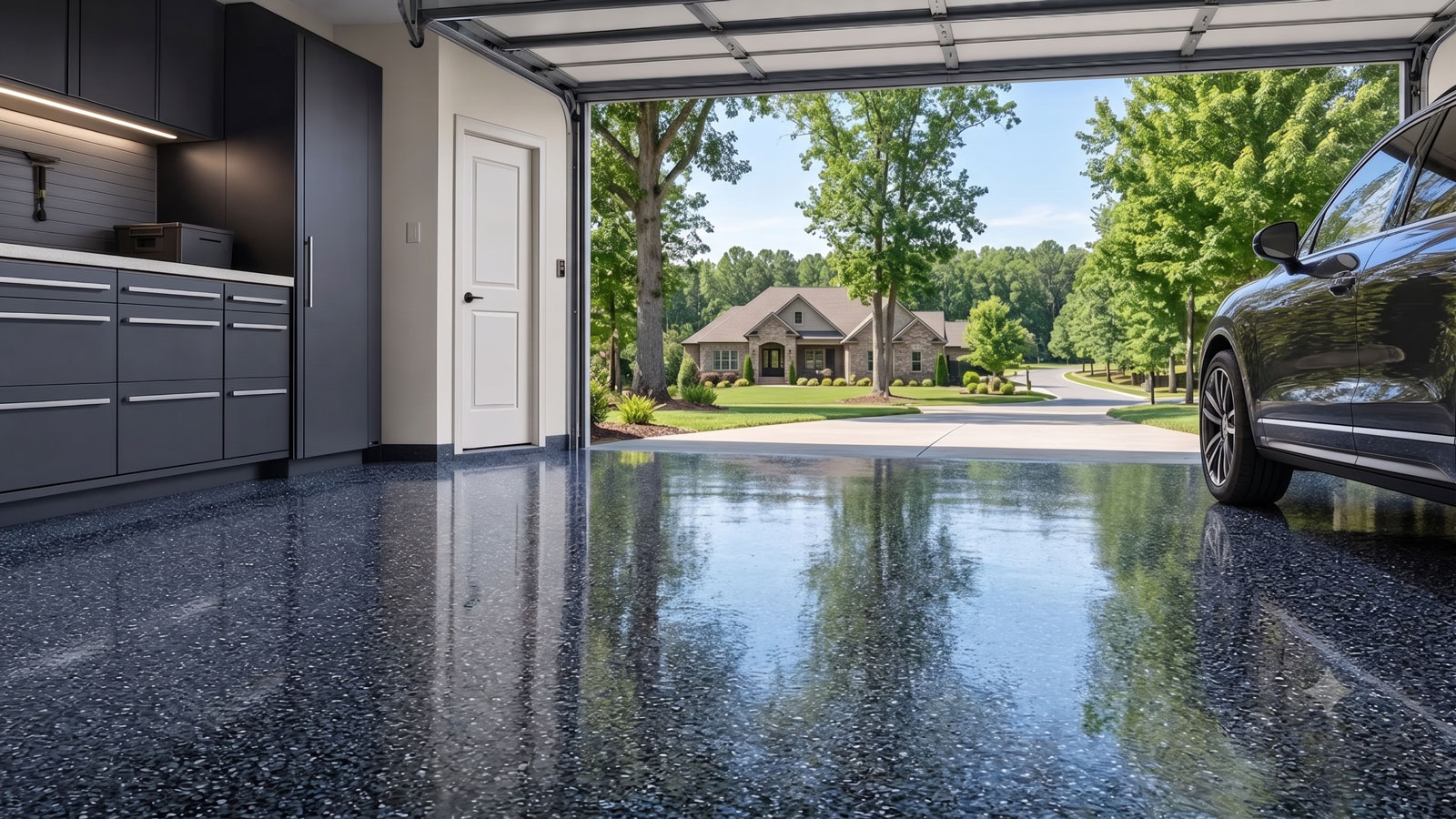
Garage Floor Coating in Princeton, NJ
Floor Coating Services in Princeton, NJ
Princeton's garage-floor decisions involve a municipality where older village streets, campus-adjacent neighborhoods and later residential areas sit within a shared but varied building landscape. The Planning Board adopted a new Master Plan and Reexamination Report on November 30, 2023. It contains separate land-use, mobility, historic-preservation and utility elements, including a municipal stormwater plan. These public distinctions explain why a detached garage on an established property may have paint and later replacement slabs, while a newer attached space can still have curing sealer or other surface treatments.
Water management is a second genuinely local consideration. Princeton's 2023 plan discusses changes in New Jersey flood-protection rules, and the municipality adopted stormwater and floodplain ordinances in several years, including 2023 and 2024. Stream corridors and drainage responsibilities are important, but ordinances do not establish excess moisture beneath one homeowner's garage. Driveway slope, downspouts, threshold water marks and persistent slab dampness require direct inspection.
Epoxy, polyaspartic and decorative-flake systems can improve cleanability on sound, correctly profiled concrete. Before choosing finish appearance, ask what old coatings must be removed, whether cracks or joints require treatment and whether drainage or access creates additional work. A topcoat cannot redirect outside runoff or repair moving concrete.
Local Market Insight
Princeton adopted its new Master Plan in November 2023, including a stand-alone stormwater element and specific floodplain rules updated in 2023–2024. Its historic residential and later-development contexts make original-versus-replacement concrete and actual driveway drainage essential inspection questions.
What Affects the Cost of Garage Floor Coating in Princeton?
Two Princeton garages with the same area can have very different preparation needs. One on an established village lot may carry old paint, patches and narrow equipment access; another in later housing may need removal of curing sealer and attention to control joints.
Master-plan runoff rules are important but not an individual moisture report. Estimates should separate water-entry correction, when present, from grinding, crack work, layer selection, edge details and parking-return timing.
- Historic buildings and later pours: Princeton's historic streets and newer housing create varied slab histories. Inspect patched areas, different concrete textures and later garage additions rather than assuming the slab matches house age.
- Old paint and surface sealers: Previous epoxy, floor paint, oil and builder treatments can reduce adhesion. The quote should state how films will be removed and concrete mechanically prepared.
- Stormwater ordinance context: The municipality's 2023 master plan and subsequent drainage ordinances govern public planning, not moisture beneath a particular floor. Check gutters, thresholds, driveway pitch and real water marks.
- Concrete cracks and joints: Door-edge wear, stable cracks, moving joints and serious deterioration require different responses. Ask what is included as a repair and what needs separate evaluation.
- Limited equipment staging: A compact town-center lot, attached garage or property with narrow access can add setup and edge labor. Include storage clearance and temporary parking in the scope.
- Finish and winter maintenance: Road grit, melting snow and wet footwear affect cleanup and texture. Verify the complete system and its installation temperature and manufacturer-based vehicle-return requirements.
Call for a clear, project-specific estimate — or request one online.
Princeton's 2023 Plan, Historic Housing and Garage Slab History
Princeton's Planning Board adopted a new Master Plan and Reexamination Report on November 30, 2023. The document separates land-use and transportation decisions from historic preservation, open-space management, utilities and stormwater planning. This recognizes different built settings within one municipality, including historic residential properties, campus-related neighborhoods and subsequent development. It does not identify what concrete lies beneath a particular homeowner's garage.
On a historic lot, a garage may have been added well after the main house was built or received a new floor during renovation. Another garage may contain several layers of paint, patched cracks or a thin old epoxy film. Newer concrete may appear clean yet retain clear sealer or curing compounds. Ask the installer to inspect actual floor condition, joints, oils and deteriorated edges before making a coating recommendation.
Access often matters in established Princeton neighborhoods. A narrow driveway, rear accessory building, garage cabinets and steps can make grinding and waste handling more time-consuming than the floor area suggests. A project-specific quote should define film removal, profiling, crack repair, perimeter work and how the household will park during curing.
Once preparation is known, compare the complete epoxy or polyaspartic system rather than a topcoat brand alone. Decorative flake can be useful, but it will not conceal an unstable slab without later risk. The local planning history is valuable because it reminds the homeowner that the condition of a repoured or altered garage may not match that of the original house.
Princeton's Floodplain Rules and Water at a Garage Threshold
The 2023 Princeton Master Plan includes a municipal stormwater component and addresses New Jersey's changing flood standards. The municipality also maintains stormwater and floodplain ordinances adopted or amended in 2020, 2022, 2023 and 2024. Those dated documents are specific public evidence of drainage management. They cannot determine whether rainfall crosses the garage threshold or whether water vapor interferes with an individual slab.
Check the property before treating water as a floor-coating problem. Observe whether the driveway slopes inward, downspouts discharge against pavement or a nearby drain collects leaves. A line of staining under the door suggests a different condition from isolated puddles after parking a wet vehicle. Persistent dark spots and blistered old paint may justify evaluation under the proposed system's moisture limits.
Princeton garages experience winter slush, deicing residue and grit, even where exterior drainage works properly. A continuous coating can make a suitable floor easier to clean, but residue and standing water still need routine removal. Homeowners should ask about wet-shoe traction and the planned surface texture rather than focusing entirely on gloss or flake color.
Where outside runoff enters, correct the drainage route first. Where the slab itself is suspect, test or assess compatibility before grinding and coating. Then specify removal of existing films, repairs, system layers, edges and realistic cure time. The municipal regulations should inform good questions, not be misrepresented as evidence of a problem at a private home.
Frequently Asked Questions
Does Princeton's floodplain planning mean my garage has moisture?
No. The 2023 plan and stormwater ordinances address community risk and development standards. Only site-level drainage history and concrete observations can determine what your garage requires.
Are garages on older Princeton lots automatically difficult to coat?
Not automatically. A later replacement slab may be sound, while a newer floor can still have curing sealer. Inspect paint, cracks, patches, joints and actual concrete condition before estimating.
Can an epoxy coating correct runoff beneath the door?
No. Drainage, paving grade or threshold problems need separate correction. A decorative floor should follow identification and control of active water entry.
What should a Princeton coating proposal include?
Ask for old-finish stripping, mechanical profiling, repairs and joint handling, any warranted moisture assessment, full coating layers, texture, site access and manufacturer-based return-to-parking timing.
Can a coated garage stay clean without winter maintenance?
No. Snowmelt, road grit and deicing material still arrive on vehicles. A sound coating can make cleanup easier than on porous concrete, but sweeping and removing water remain important.
Princeton Neighborhoods & Local Context
Phone Quote Line
Speak with a local floor coating specialist about your project and get a realistic estimate range.
(609) 222-8999Typical Project Cost
$3,000–$5,500
Typical range for a standard two-car garage. Final pricing depends on floor size, concrete condition, prep work, coating type, and finish options.
Helpful Guides