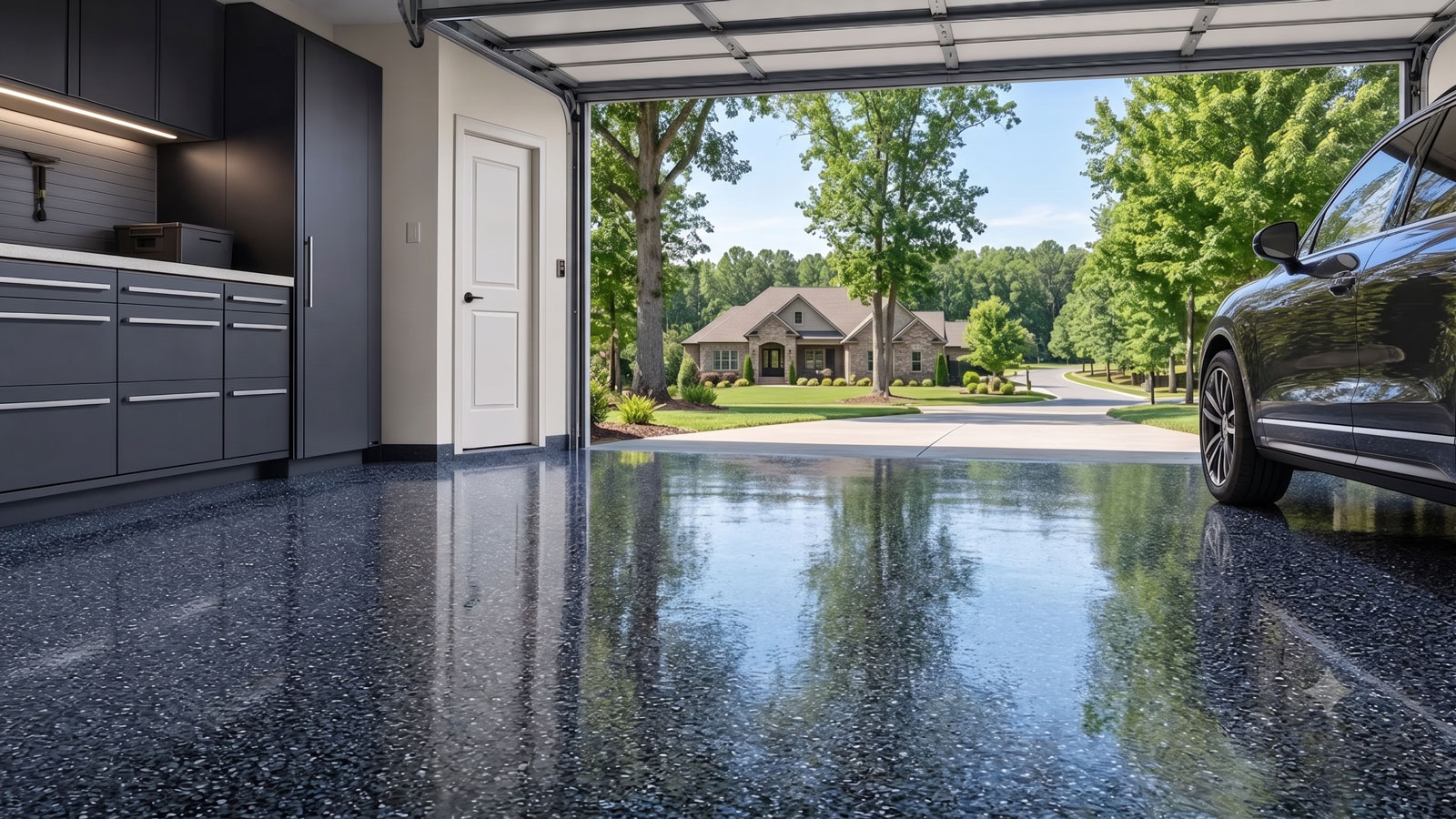
Garage Floor Coating in Lawrence Township, NJ
Floor Coating Services in Lawrence Township, NJ
Lawrence Township's garage floors sit within a Mercer County community whose established residential areas, Lawrenceville village and major highway corridors have different development histories. The township's original master plan dates to June 14, 1995, with reexaminations in 2006, 2013 and December 18, 2023. A new planning process launched in 2024 but experienced delays and was being restarted in 2026. These dates matter because proposed planning changes are not completed building changes. A garage behind an older house may have a replacement floor, while a later attached garage may retain builder treatments.
The township has published flood, land-use and transportation maps for its planning process, and its corridors connect established neighborhoods with more intensive commercial development. These maps are useful context for questions about driveway grade, paved runoff and garage access, but they do not establish moisture under a private concrete slab. Actual water marks, downspout discharge, concrete condition and past repairs must be assessed on the lot.
Epoxy, polyaspartic and decorative-flake systems may make sound, prepared concrete easier to maintain. Before choosing one, determine whether paint, oil, sealer, joints or cracks change the scope. A coating cannot correct stormwater entering beneath a garage door or stabilize serious concrete damage.
Local Market Insight
Lawrence Township's master-plan history includes 1995 adoption, reexaminations in 2006, 2013 and 2023, and a separate 2024 update process delayed into 2026. Its village, residential and Route 1-area settings require individual slab-history and drainage assessments.
What Affects the Cost of Garage Floor Coating in Lawrence Township?
An established Lawrenceville accessory garage can carry old paint and limited grinder access; a later suburban attached bay may have sealer or control joints. Neither age nor dimensions alone explains preparation costs.
Public land-use and flood maps provide useful planning context but cannot prove that runoff enters a private garage. The bid should separately identify stripping, grinding, concrete repairs, exterior drainage issues, system layers and vehicle-return timing.
- Garage construction eras: Lawrenceville village and later township housing may include different slab ages, patches and additions. Inspect the concrete rather than assigning work from the home's building date.
- Old films and oil: Paint, previous coating systems and workshop residues can prevent bonding. Newer concrete may also retain builder sealer. Identify materials and specify appropriate film removal and profiling.
- Real drainage pathways: Township flood and land-use maps cannot determine if a private garage takes water. Check the driveway slope, gutters, past threshold entry and any persistent slab dampness.
- Cracks and repair scope: Stable surface cracking, joints and damaged entrance edges need different preparation. Ask the installer to distinguish ordinary repairs from continuing movement or unsound concrete.
- Equipment and site constraints: A narrow village property, rear garage or densely stored space can add staging and edge labor. Include actual access and temporary vehicle parking arrangements.
- Coating choice and cure: Daily parking, winter residue, finish traction and installation temperature matter. Obtain the full system's layer schedule and manufacturer-based return-to-vehicle instructions.
Call for a clear, project-specific estimate — or request one online.
Lawrenceville Village, Route 1 Growth and Different Concrete Histories
Lawrence Township adopted its master plan in 1995 and has formally reexamined it in 2006, 2013 and 2023. The municipality began a new master planning initiative in 2024 with public meetings, but subsequent housing-policy demands delayed that effort and work was expected to resume in 2026. The official document timeline is meaningful because a draft update cannot be treated as a completed development project or as the current condition of a garage.
Lawrenceville village properties and suburban neighborhoods along the township's transportation network can have different garage forms and periods of construction. An older house may have a detached garage with later concrete; a newer bay may have curing treatment or a previous homeowner's coating. Inspect sections of different texture, paint wear beneath tires, cracks and patches. Do not rely on the exterior architectural style as a substitute for slab inspection.
Project logistics may also vary. Rear-yard access, narrow approaches, steps, garage cabinetry and storage can increase setup work before grinding begins. The estimate should specify how any oil, old paint or failing sealer will be removed and what treatment stable cracks and joints require. Severe deterioration or active movement deserves separate evaluation.
The resulting bid should explain preparation, repair, complete coating layers, finish texture and cure requirements. Decorative flake can be a useful option after the concrete is ready, but an attractive topcoat cannot fix a flawed substrate. Lawrence's varied planning history is useful precisely because the individual building matters more than a single township-wide generalization.
Township Flood Maps, Runoff and the Garage-Door Line
Lawrence Township's recent planning process published existing-conditions maps including land use, transportation and flood mapping. It also maintains environmental and sustainability planning elements dating back through earlier master-plan amendments. These documents show that water and infrastructure are municipal concerns, but they cannot establish a water problem at a particular home.
Follow the property's own runoff route. Does the driveway descend to the garage? Where do roof leaders empty? Is there a blocked drain near the door? Inside, recurring water marks, blistered paint and damp patches after dry weather can suggest different issues from the puddles carried in by a parked car. Exterior water entry should not be confused with internal concrete vapor.
Winter snowmelt, road grit and deicing material are routine cleaning concerns across inland Mercer County. Sound coated concrete can be easier to sweep or wipe, but it still requires maintenance. Ask about texture for wet shoes, road grit at the entrance and how the family will park while the new system cures.
If water flows under the overhead door, exterior drainage or threshold work is a separate first step. If the slab itself is damp, evaluate it according to the proposed coating system's requirements. Once the concrete is suitable, the quote should define cleaning, profiling, crack and joint repair, coating layers and return-to-use. Public flood maps should guide homeowner questions without turning into an unsupported diagnosis.
Frequently Asked Questions
Does Lawrence Township's 2024 master-plan update describe current construction?
Not necessarily. The 2024 update experienced delays and was being restarted in 2026. Planning documents and proposed development should not be confused with completed houses or the condition of existing garage slabs.
Is an older Lawrenceville garage too old to coat?
No automatic age cutoff follows from the house's history. Inspect the garage's actual concrete, old paint, patches, cracks and soundness before choosing repairs or a coating system.
Can polyaspartic stop driveway runoff entering a garage?
No. Drainage, grade and threshold problems are separate from floor finishing. Correct active water entry and assess the slab before installing decorative layers.
What should a Lawrence Township estimate specify?
Check removal of old films, grinding, cracks and joints, edge details, moisture evaluation when warranted, layers, texture, equipment access and manufacturer-based vehicle-return timing.
Will a finished floor need winter road-salt cleanup?
Yes. A properly installed surface may make residue easier to remove than porous concrete, but salty meltwater and abrasive road grit should still be swept or cleaned away regularly.
Lawrence Township Neighborhoods & Local Context
Phone Quote Line
Speak with a local floor coating specialist about your project and get a realistic estimate range.
(609) 222-8999Typical Project Cost
$3,000–$5,500
Typical range for a standard two-car garage. Final pricing depends on floor size, concrete condition, prep work, coating type, and finish options.
Helpful Guides